
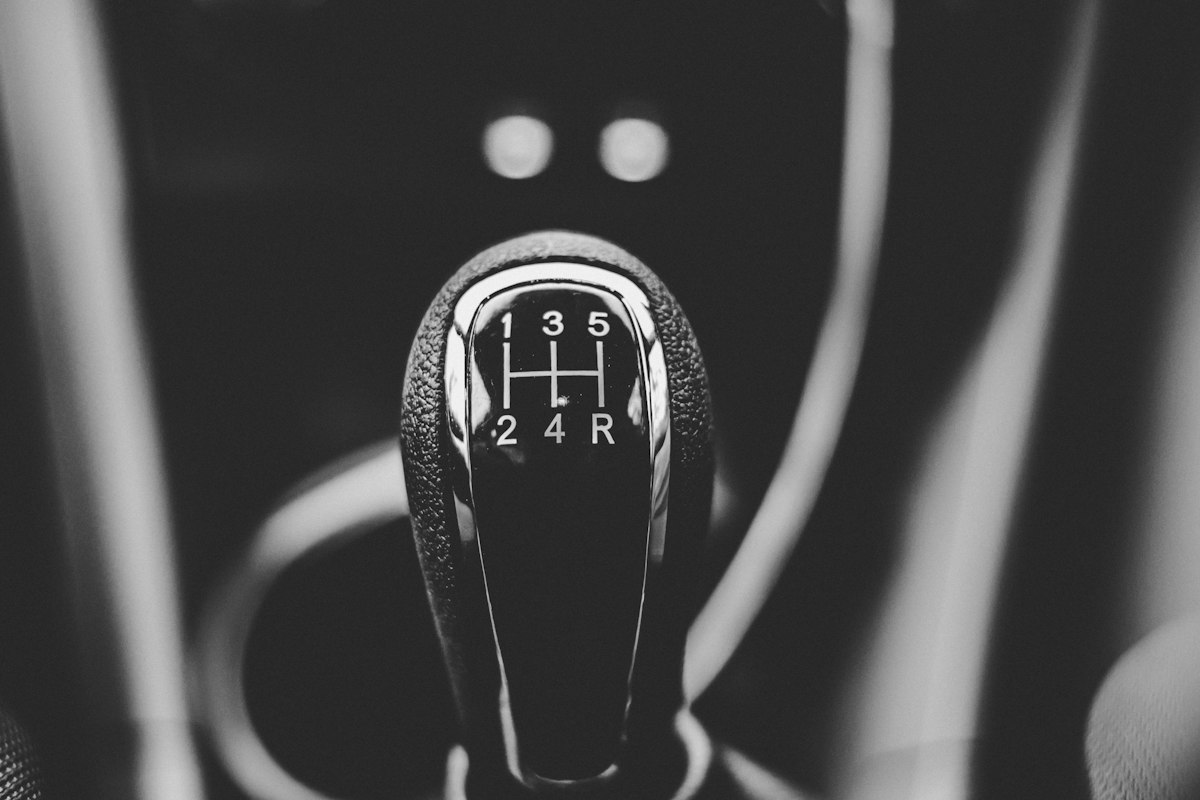
There’s a particular sound a clutch makes right before it catches: a low mechanical hum that rises just slightly as the plates meet. Most people never learn to hear it. I learned it in a Jeep that didn’t have doors.
My Grandfather’s Jeep
Long before I had a license, I had a lesson. My grandfather’s Jeep was the kind of vehicle that seemed built entirely out of exceptions: no power steering, no air conditioning, and absolutely no patience for anyone who tried to force it into gear instead of feeling their way there. Afraid of getting it wrong, I learned to pay attention fast. Gramps was a stern man, nothing gentle about him, but he’d raised five daughters and taught every one of them to drive. Teaching his granddaughter was simply the next chapter of that job.
I didn’t understand the mechanics of it then. I understood the feeling: that a car wasn’t just something you pointed and pressed a pedal in, but something you had a conversation with. Three pedals meant three variables to manage at once, and getting it wrong meant a stall, a lurch, and a patient sigh from the driver’s seat. Getting it right meant something clicked into place that an automatic could never replicate: you were part of the machine, not just a passenger giving it instructions.
The Corvette That Started It
When it came time for my first car, there was no negotiating an automatic. It was a four-speed 1977 Corvette that my dad had pieced together. The motor came out of an old Chevy truck, but everything else was intact. If I wanted to drive it, I had to learn to drive it properly. No easing in with a Civic or a hand-me-down sedan. I went straight from a kid in a lap to a teenager stalling out at every intersection in a car that had opinions about how it wanted to be driven. No new hydraulic clutch. This car was all American, old school.
That car taught me everything the Jeep had only introduced. Rev-matching on a downshift. The exact bite point of the clutch: not “somewhere in the middle” but a specific, learnable inch of pedal travel. The difference between shifting because the tachometer told you to and shifting because you could feel the engine asking for it. A four-speed doesn’t forgive laziness. Miss a shift and you know immediately, in the grinding gears and the head-snap of a bad clutch release, that you weren’t paying attention.
By the time I’d put real miles on that Corvette, driving a manual wasn’t a skill I possessed: it was a lens I saw every car through. Automatics started to feel like watching a movie of driving instead of driving.
Why It Never Left
Every car I’ve owned since has been chosen with one condition attached: somewhere in the collection, there has to be a manual. It’s not nostalgia exactly, though there’s plenty of that tied up in it. It’s that the skill itself feels like something worth keeping alive on purpose, in an era where fewer and fewer people are taught it at all.
Manual transmissions have quietly become a rounding error in new car sales: a niche option reserved for enthusiast trims and diehards who go looking for it. Rental companies barely stock them. Driving schools default to automatics. An entire generation is getting licensed without ever needing to know what a clutch pedal is for. And so the people who do know feel less like drivers and more like keepers of something: a small, specific competence that used to be assumed and is now almost a party trick.
I still drive one regularly, not because it’s more efficient or more practical (it isn’t, most days), but because it keeps me honest behind the wheel. You can’t check your phone at a red light in a manual. You can’t half-pay-attention through a downshift on a mountain road. It demands mental presence in a way that automatics have quietly made optional.
Passing It Down
I understand a little better what my grandfather was actually teaching me in that old Jeep. It was never really about the gears. Today I took out my 2025 Bronco. It’s not the old Jeep, but it’s a two-door manual, and it reminds me of my grandfather. I’m pretty sure he would have loved it.

Discover more from Amie.from.here
Subscribe to get the latest posts sent to your email.
